
Moon and phase
Use Moon and phase labels as optional symbols for pacing, visibility, building, release, or reset; they do not establish a user's mood or body state.
Choose or refresh a sky moment to request Moon phase, illumination, and planet-position data with English symbolic labels.
Use the default moment or choose another date and time. A successful refresh should update the table, sky map, aspects, and lunar background together.
Active segment: click the date, month, year, hour or minute inside the field, then use the keyboard arrows or mouse wheel to adjust it. The map updates automatically; Calculate sky is still available as a manual refresh.
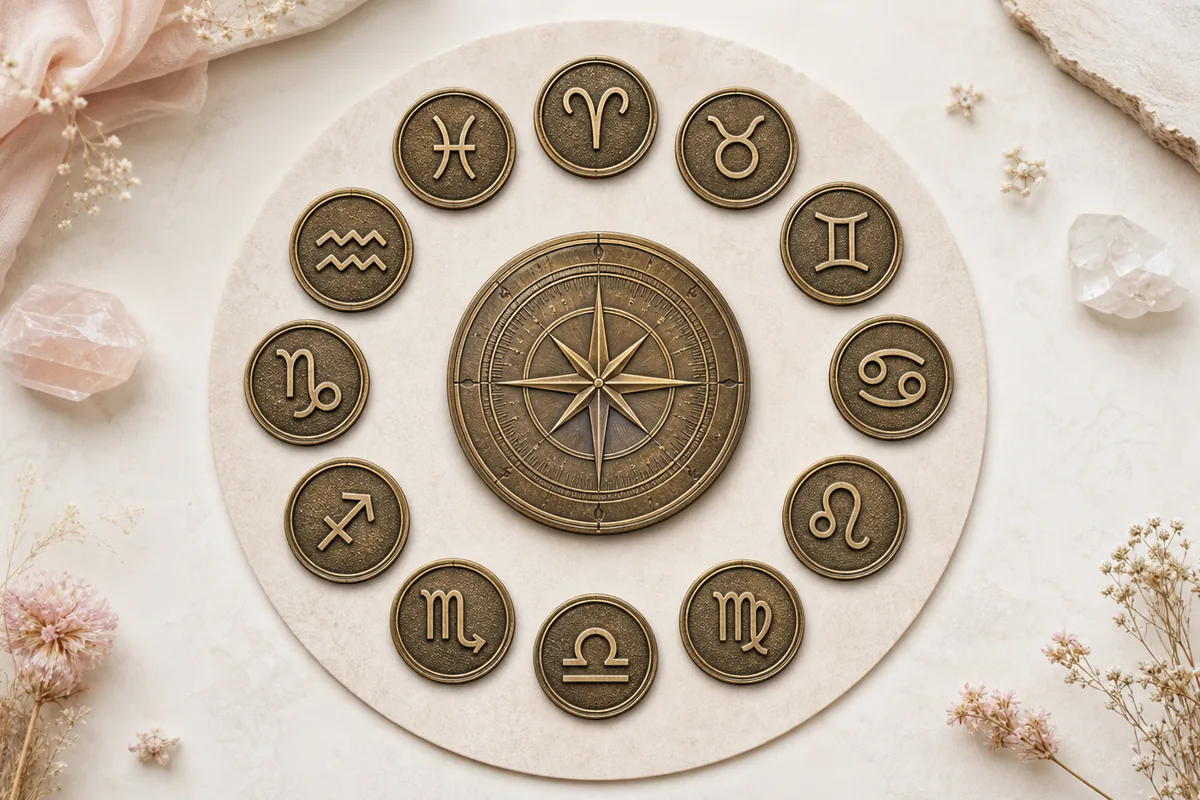
Use the tracker as a structured sky check, not as a list of isolated placements. Start with the Moon, then personal planets, then aspects, then retrograde or slower background planets.
Use Moon and phase labels as optional symbols for pacing, visibility, building, release, or reset; they do not establish a user's mood or body state.
Astrologers use Sun, Mercury, Venus, and Mars as symbols for attention, communication, affection, desire, and action.
Astrologers interpret aspects as possible symbols of support, friction, delay, or choice; relevance to a person requires a calculated natal comparison.
Retrograde motion is not a disaster marker. Treat it as review, return, slowed timing or a need to revise the topic carefully.
A planet tracker is a current-sky reference. It becomes useful when the reader connects today's positions to a question, a chart area or a repeating pattern.
Use positions as symbolic weather, not as commands.
Exact relevance depends on where the transit lands in a birth chart.
The Moon changes quickly, so it is best for daily tone and short reflection.
Outer planets are commonly used as longer-range background symbols, not proof of events or pressure in a visitor's life.
A planet tracker should help users notice current themes and choose practical responses without treating transits as commands.
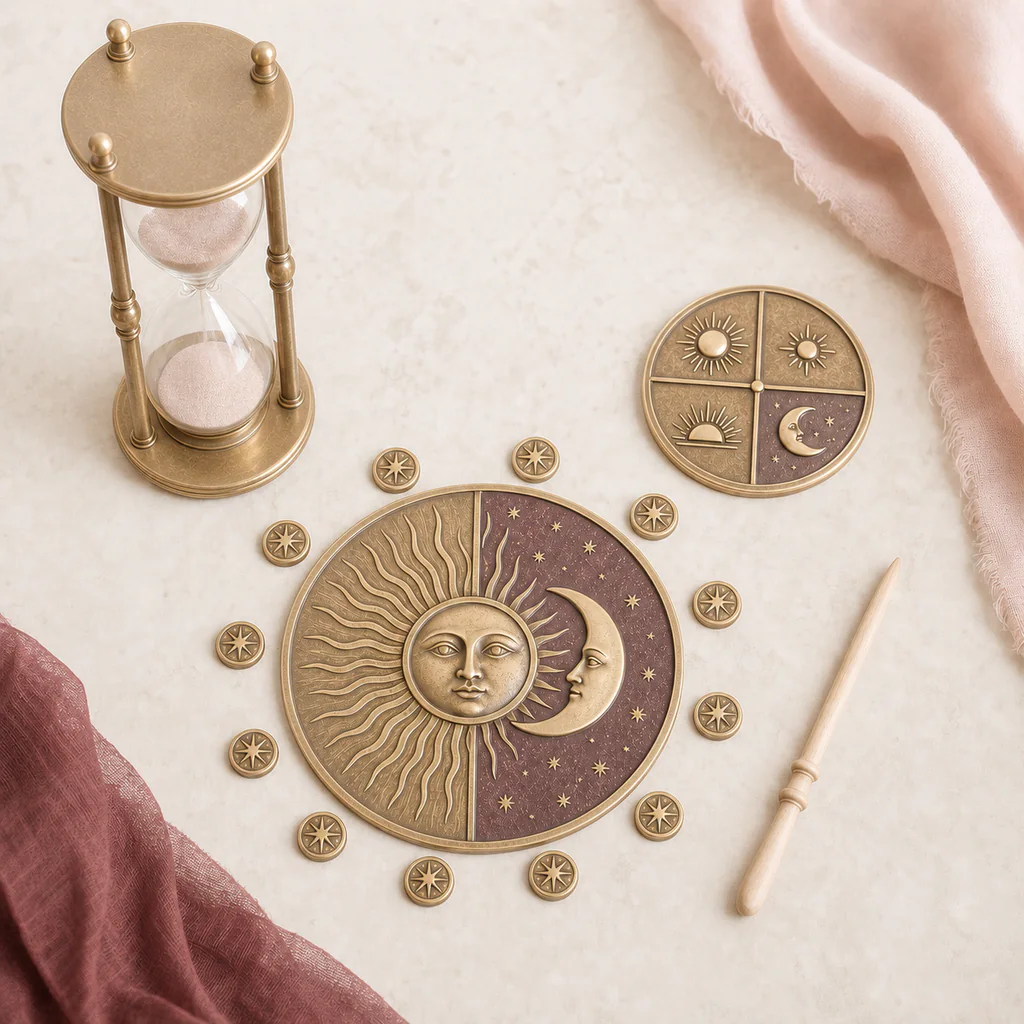
What function is active?
What style does it take?
Where does it land personally?
Choose a grounded response.
The tracker is designed to keep the map, planet cards, aspects, and seven-day Moon rhythm connected to the selected date and time when the runtime returns data.
The moving sky map gives the visual overview before the reader studies individual cards.
Personal planets are read first, then social and slow planets add background tone.
Only the strongest contacts should be highlighted so the page does not turn into noise.
The Moon section should help with short-term emotional and practical timing.
Use this route as a working page, not a loose glossary. A stronger result comes from data quality, layered interpretation and a clear limit.
Start with the free astrology result, then continue only when a calculator, chart guide or deeper report fits your question.
Choose the date and time for the sky moment you want to inspect.
Read only the positions, aspects, and Moon context returned for the selected moment.
Point toward a fuller astrology report only when the visitor needs longer synthesis.
Keep a dated note outside the tool if you want to compare the symbolic context later.
Free astrology tools are planning and reflection aids. They cannot guarantee events or replace real-world judgment.


